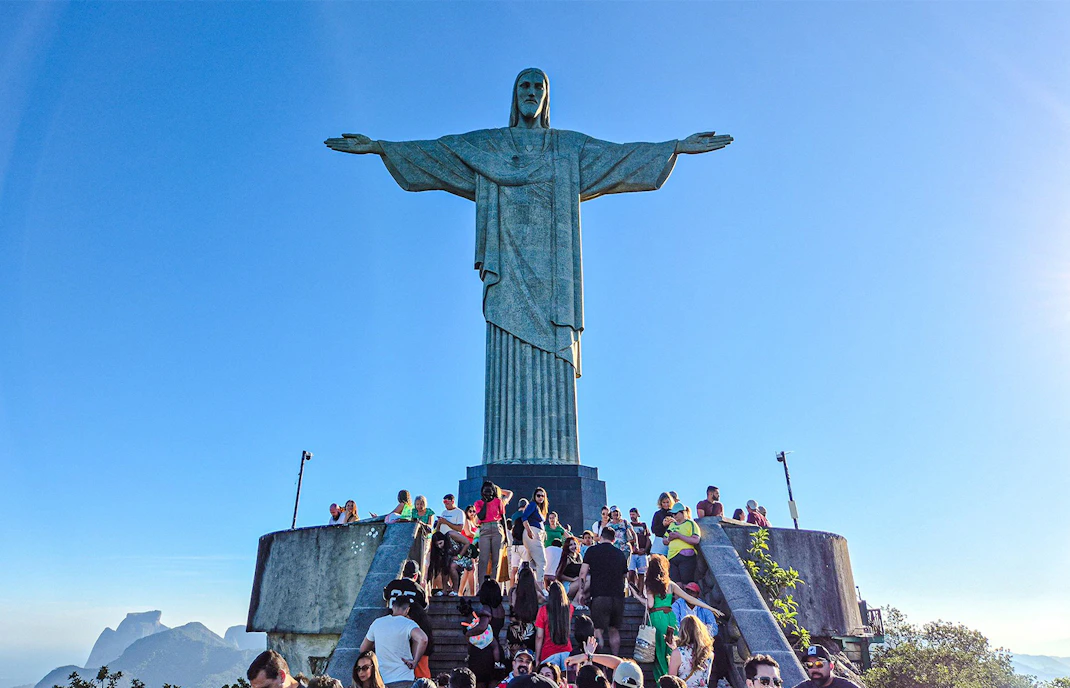
Plans for a mountaintop Christ statue circulated in Rio as early as the 1850s, but the modern project only gained momentum in the 1920s after a nationwide Catholic fundraising campaign. Construction began in 1922, and the monument was inaugurated in 1931, giving the idea an unusually long journey from concept to completion.
Twelve interesting facts about Christ the Redeemer in Rio de Janeiro
Perched above Rio on Corcovado, Christ the Redeemer is far more than a skyline icon. These Christ the Redeemer facts trace its 19th-century origins, cross-Atlantic craftsmanship, lightning repairs, and railway history.
Interesting facts about Christ the Redeemer
The Vision Took Decades
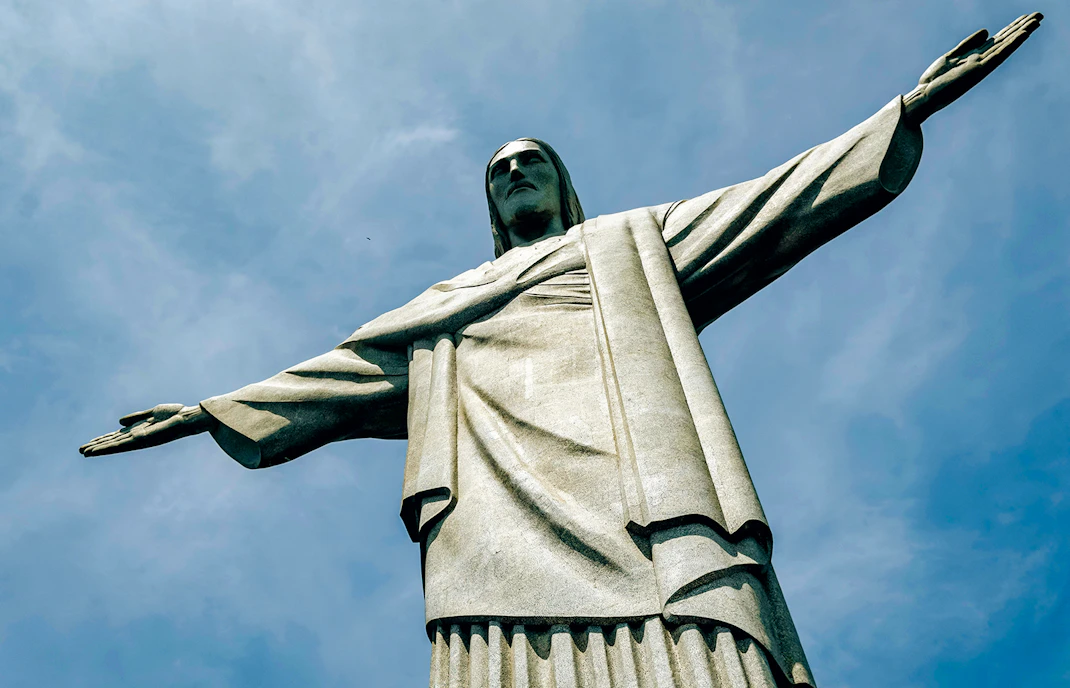
Soapstone Covers Every Surface
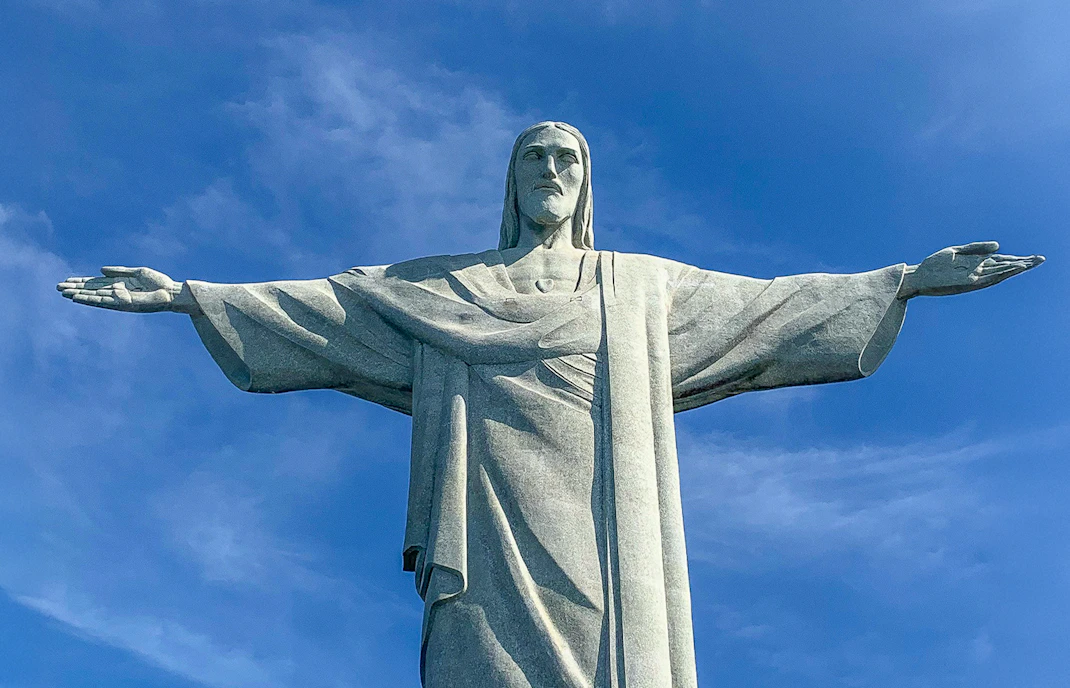
Rather than carved stone, the monument is built from reinforced concrete and covered with thousands of hand-applied triangular soapstone tiles. Soapstone was chosen because it resists temperature swings and weathering while keeping a smooth finish. Up close, the surface looks almost mosaic-like, which explains why the statue feels softer and more textured than photos suggest.
Its Parts Came From France
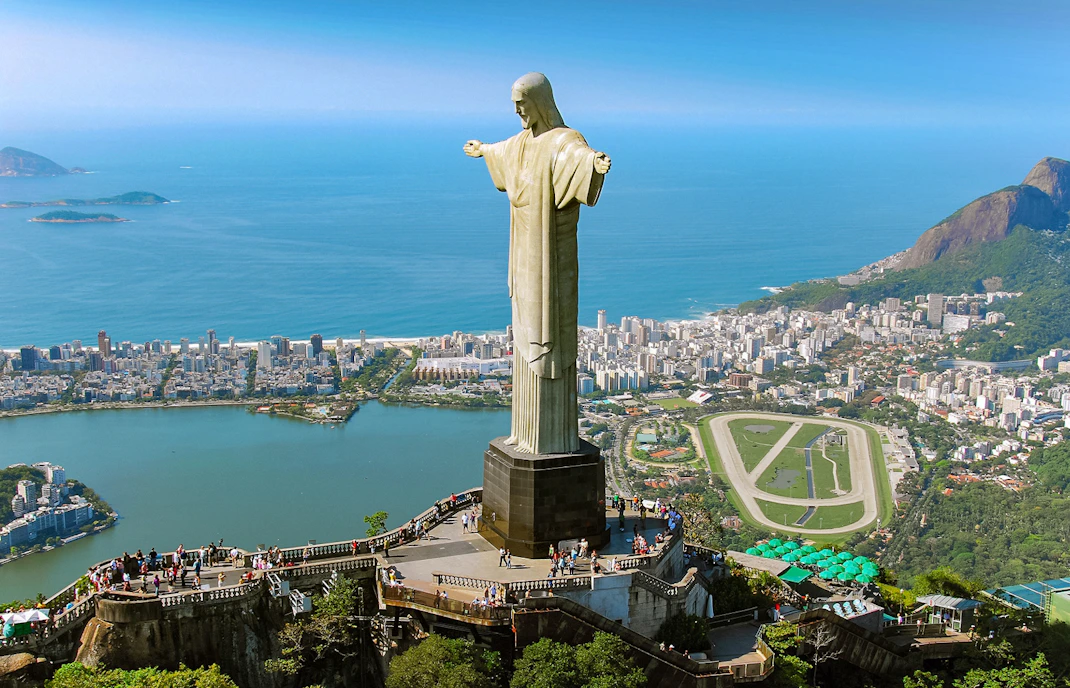
Brazilian engineer Heitor da Silva Costa led the project, but key elements were shaped overseas. French-Polish sculptor Paul Landowski modeled the head and hands in France, and engineer Albert Caquot contributed structural expertise. Those pieces were later shipped to Brazil and assembled on Corcovado, making the monument an international collaboration as much as a national symbol.

Corcovado Was Part of the Plan
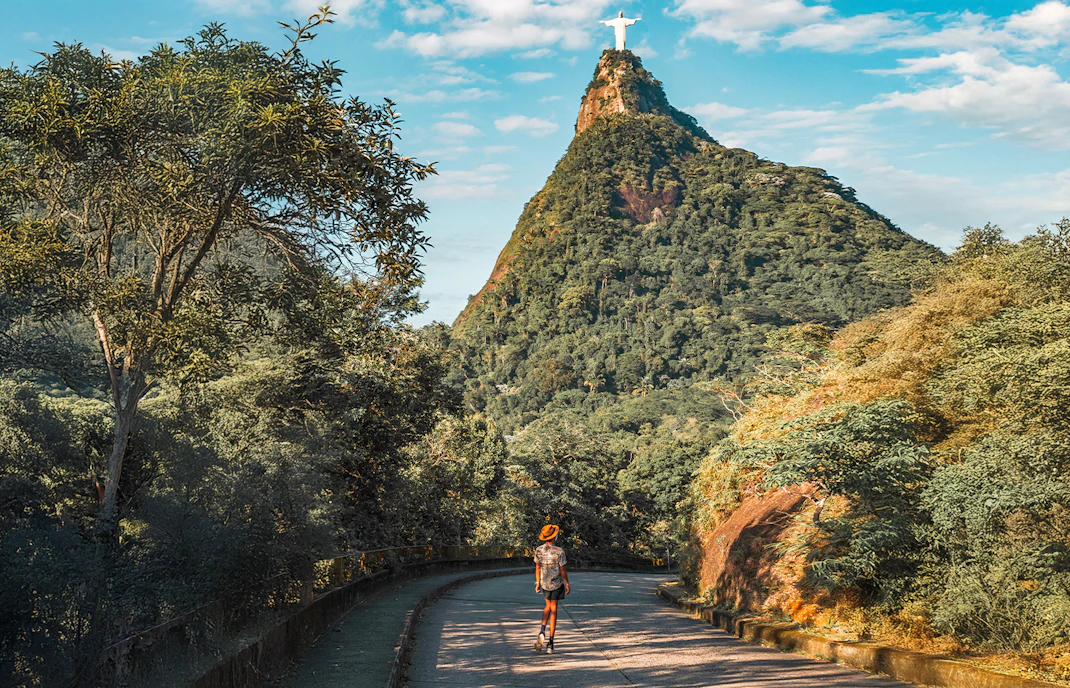
Christ the Redeemer stands on Corcovado, a peak about 710m (2,329 ft) above sea level inside Tijuca National Park. That perch wasn’t chosen only for views: its central position makes the statue visible from large parts of Rio. The result is a monument that feels woven into the city’s skyline rather than confined to a single neighborhood.
The Arms Span 28 Meters
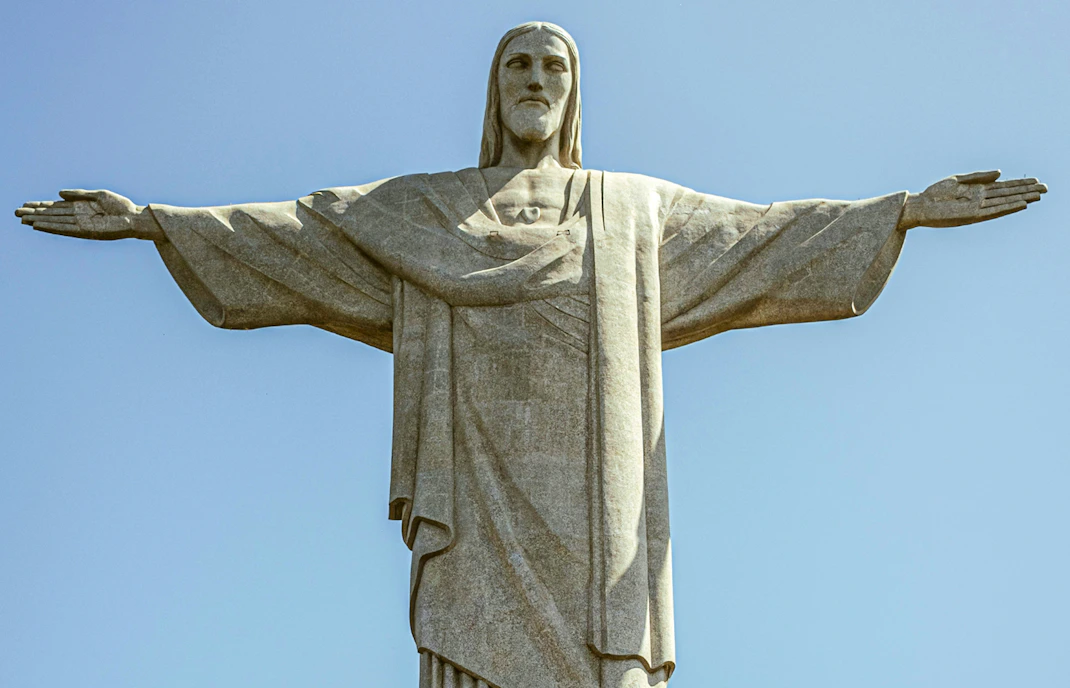
Seen from afar, the figure looks elegant; in numbers, it’s massive. The statue rises 30m (98 ft) above an 8m (26 ft) pedestal, its arms stretch 28m (92 ft) wide, and the whole monument weighs about 635 metric tons. Those proportions help it stay visually balanced against Corcovado’s steep granite summit.
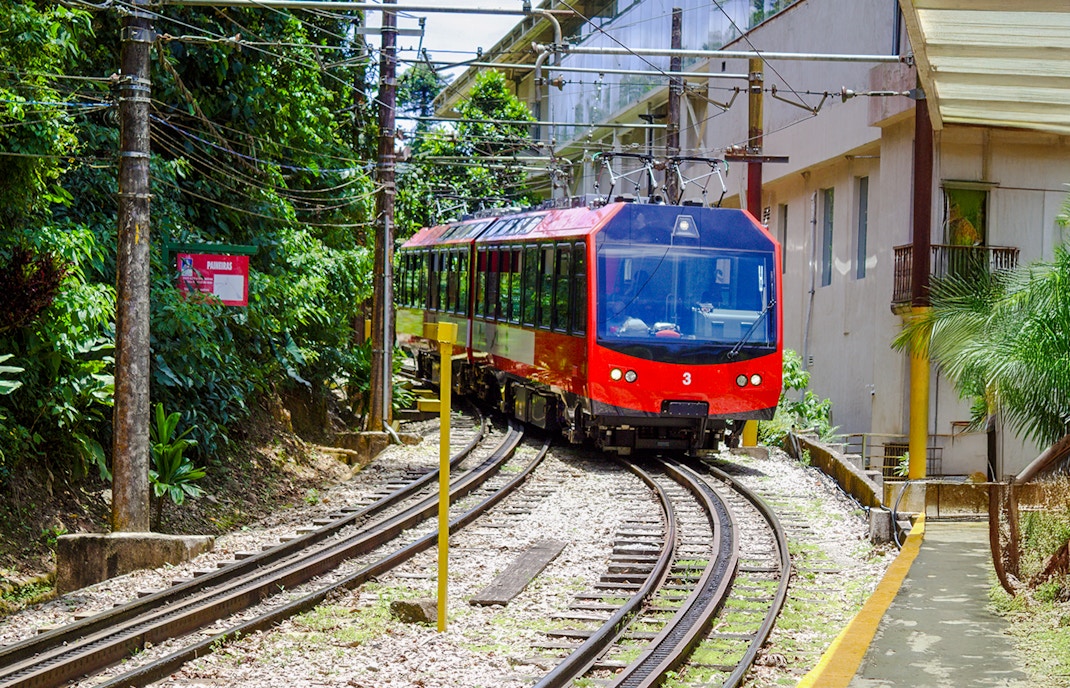
The Train Predates the Statue
Long before the statue existed, the Corcovado Railway was already climbing the mountain. Opened in 1884, the line later helped transport materials and workers during construction, and today it still carries visitors through Tijuca Forest in about 20 minutes. That means one of Rio’s classic tourist rides also played a practical role in building the monument.
Lightning Is a Real Threat
At nearly 710m (2,329 ft) above sea level on an exposed peak, the statue is regularly struck by lightning during Rio’s summer storms. One well-documented strike in 2014 damaged part of the right thumb, and other storms have chipped fingers and the head. Routine restoration is essential, not cosmetic, because the weather on Corcovado is punishing.
It Has Its Own Chapel
Inside the pedestal sits a small Catholic chapel dedicated to Nossa Senhora Aparecida, Brazil’s patron saint. It was inaugurated in 2006, adding a functioning devotional space to a monument already rich in religious meaning. That detail is easy to miss from the viewing deck, yet it reinforces that Christ the Redeemer remains more than a scenic lookout.

A Wonder of the World
In 2007, Christ the Redeemer was voted one of the New Seven Wonders of the World, cementing its status far beyond Brazil. The monument also forms part of Rio’s UNESCO-listed Carioca Landscapes between the Mountain and the Sea. Few landmarks combine global recognition, religious symbolism, and such a dramatic natural setting in one image.
Access Became Much Easier
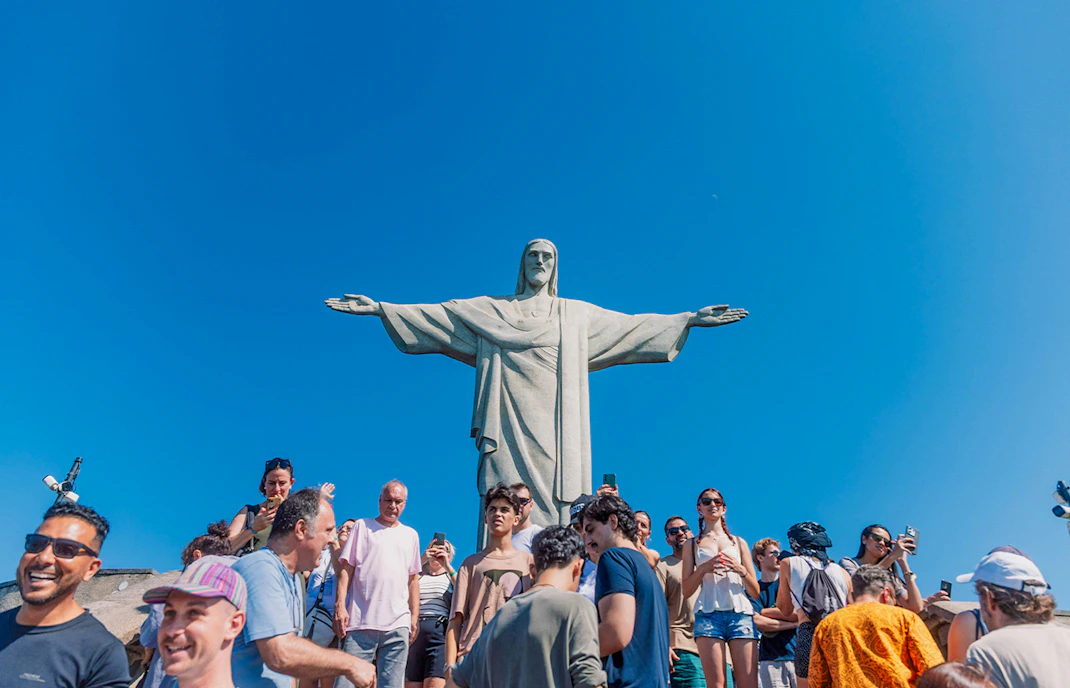
Until the early 2000s, reaching the final platform meant tackling more than 200 steps after arriving near the summit. Elevators and escalators were added in 2003, making the monument dramatically easier for a wider range of visitors to enjoy. It’s a modern upgrade that quietly reshaped the Christ the Redeemer experience without changing its historic silhouette.
Millions Visit Each Year
Christ the Redeemer is not just iconic; it’s one of Brazil’s busiest paid attractions. Recent years have brought around 2–2.5 million visitors annually, with 2023 reported as a record year at roughly 2.4 million. Those numbers help explain why early and late time slots are prized when weather and visibility are on your side.

Its Silhouette Travels Worldwide
Even people who have never been to Rio can usually identify the statue instantly. Christ the Redeemer appears constantly in films, television, sports broadcasts, travel posters, and news imagery because its outline communicates ‘Rio’ in a single frame. Few landmarks function so powerfully as visual shorthand for an entire city and country.


